The work existed.
The system around it
did not.
Documentation could not
become a second, slower version
of production.
Every new workflow had to survive the same standards as application code: shared ownership, versioned changes, automated checks, predictable deployment, and enough clarity that another engineer could verify the decision.
The documentation became a first-class application.
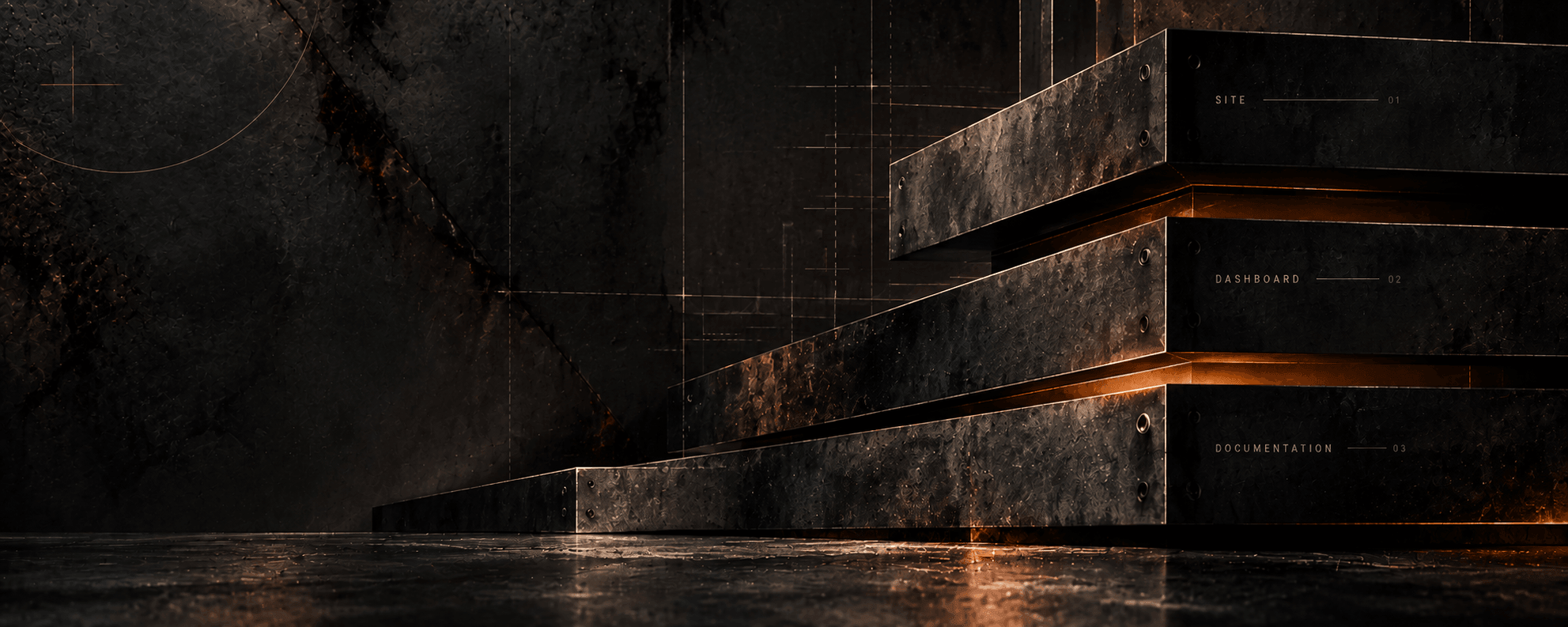
Portfolio OS is structured as a monorepo with separate application responsibilities and shared delivery constraints. The documentation surface explains the same architecture the repository enforces.
EVIDENCE 01
Architecture is visible where the work is explained.
The docs surface maps application responsibilities, infrastructure, APIs, testing, and delivery practices into a navigable production artifact.

The design followed the
operating model.
Treat docs as an
applicationDocumentation has its own navigation, build surface, ownership, and deployment path.
Keep responsibilities
explicitSite, dashboard, and docs remain separate products inside one governed repository.
Make verification
routineLinting, type checks, tests, and browser validation travel with the work instead of following it.
Preserve delivery
contextArchitecture and implementation decisions stay close enough to the code to remain useful.
RESULTS
A system that can be
operated, explained,
and extended.
The result was not another layer of presentation. It was a clearer operating model for the product and the people responsible for it.
- GOVERNANCE
- Documentation entered the same review and delivery path as application code.
- CLARITY
- Application responsibilities became visible instead of living only in repository structure.
- CONTINUITY
- Future implementation work now has a durable place to preserve architectural context.
